
No products in the cart.
Homo sapiens, which appeared 100 – 300 thousand years ago, like other earlier representatives of our species, were in a difficult situation in the wild. The man did not have claws, great speed and was no longer able to climb trees well. Accordingly, our ancestors would have been easy prey for predators if they could not solve the problem of defenselessness. Thanks to the developed intelligence and the desire to survive, our ancestors began to create tools and the first weapon – a spear.The spear was the first polearm of man, which made it possible to effectively hunt and defend against predators. The first copies were essentially a long burnt and pointed stick. In the Stone Age, spears were used by hunters as throwing weapons. Gradually, an obsidian spearhead appeared. Axes also appeared, which were used as tools.There were clubs that were ineffective against animals, but they were suitable for fighting other people. At least archaeologists in western Kenya have found the remains of hunter-gatherers about 10,000 years old with fatal blunt injuries, indicating the use of clubs.
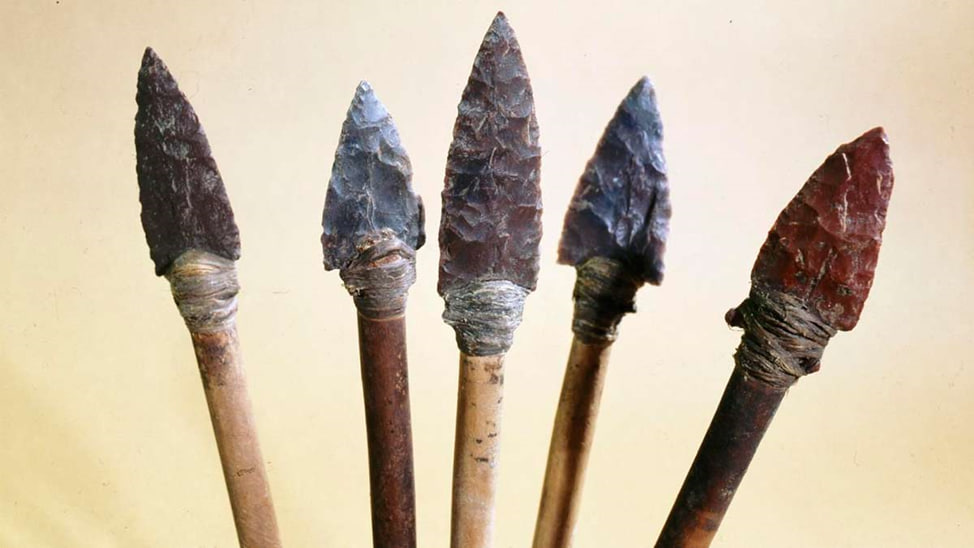
Pole weapon in the era of
the first civilizations and antiquity:
Gradually,
by the time of the emergence of the first civilizations in the 4th millennium
BC, other types of polearms began to appear, such as prototypes of battle axes
in the Middle East with a characteristic narrower and lighter blade and maces.
In ancient Egypt, the army actively used spears and maces. The Sumerians
actively used spears and copper axes on a long shaft. The history of shaft
weapons began as a full-fledged instrument of war, which was used until the
18th century, until it was replaced by firearms.
In Classical
antiquity (from the 8th century BC), when the Greek city–states flourished,
hoplites, known to many, appeared, who armed themselves with long spears and
short blades as auxiliary weapons. The Greek spear Dori was 2-3 meters long,
which made it possible to use several rows of spearmen for close combat when
building a phalanx.
The Roman Empire during the era of expansion equipped its legionnaires with javelins and short swords for a direct clash. This allowed the Romans, coupled with discipline, to defeat a numerically superior enemy. Roman javelins were no more than 2 meters long and each legionnaire had three throwing spears. The Celtic and Germanic tribes had shaft weapons in the form of battle axes and spears. There was a similar situation in the Far East.
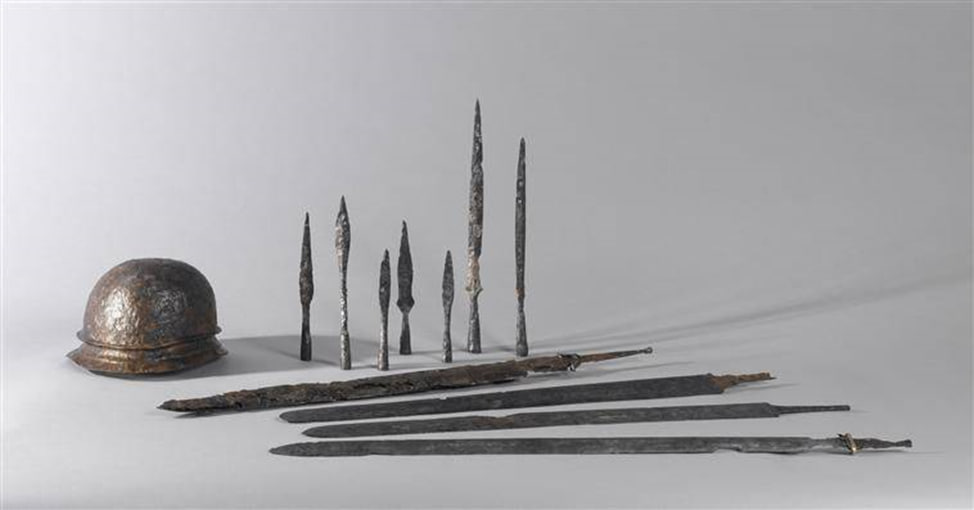
Spearheads
that were discovered by archaeologists in the places where Celtic tribes lived.
In general,
in the ancient era, shaft weapons are actively developing, but the shapes of
the tips and blades were simple. This was caused by the lack of the need for
universal thrusting, chopping and cutting properties of one type of polearms.
To do this, as a rule, a combination of a spear and a short bladed weapon like
a gladius was used, which could effectively stab an enemy in armor.
Anatomically shaped armor like that of the Greeks or laminar, like that of the
Romans, could be pierced with a thrusting blow, and in the case of a battle
axe, it is possible with a chopping one.
Even the
ancient Near Eastern states and steppe nomads did not need universal polearms,
since spears and bows were more than enough to win victories over the Romans
and Greeks due to the impressive maneuverability of mounted archers and heavy
cavalry.
Pole weapon in the Middle
Ages:
With the
fall of the Western Roman Empire in the 5th century AD, the era of the Middle
Ages begins and others arise on the ruins of the mighty state, which were
created by former barbarian tribes. For a long time, the polearm has not been
subjected to serious changes. It was distributed in the form of maces, spears and
axes among the Scandinavians, Franks, Lombards and other European and Middle
Eastern peoples. However, closer to the beginning of the 14th century, the
first armor began to gradually spread, which was difficult to damage, crumple
or pierce with the usual weapons at that time, with the exception of maces. The
force of the blow was absorbed by gambeson and the man in armor has minimal
damage. As a rule, the armor was worn by feudal cavalry.
It was
during this period that new types of polearms began to emerge, which were
highly specialized or universal. This was necessary for a more successful
confrontation of the knight cavalry.
So
halberds, some types of glaives, bec de corbin, and axes began to develop, and
pikes became popular. The main task of these types of weapons was to confront
warriors in armor. Halberds and axes made it possible to hook the enemy by the
joints of armor and throw them off the horse.
Halberds and axes had a combination of stabbing, chopping and crushing weapons. The axes had the tip of a hammer and an axe with a combination of bec de corbin and a pointed spike, and it was usually used by knights to confront each other.
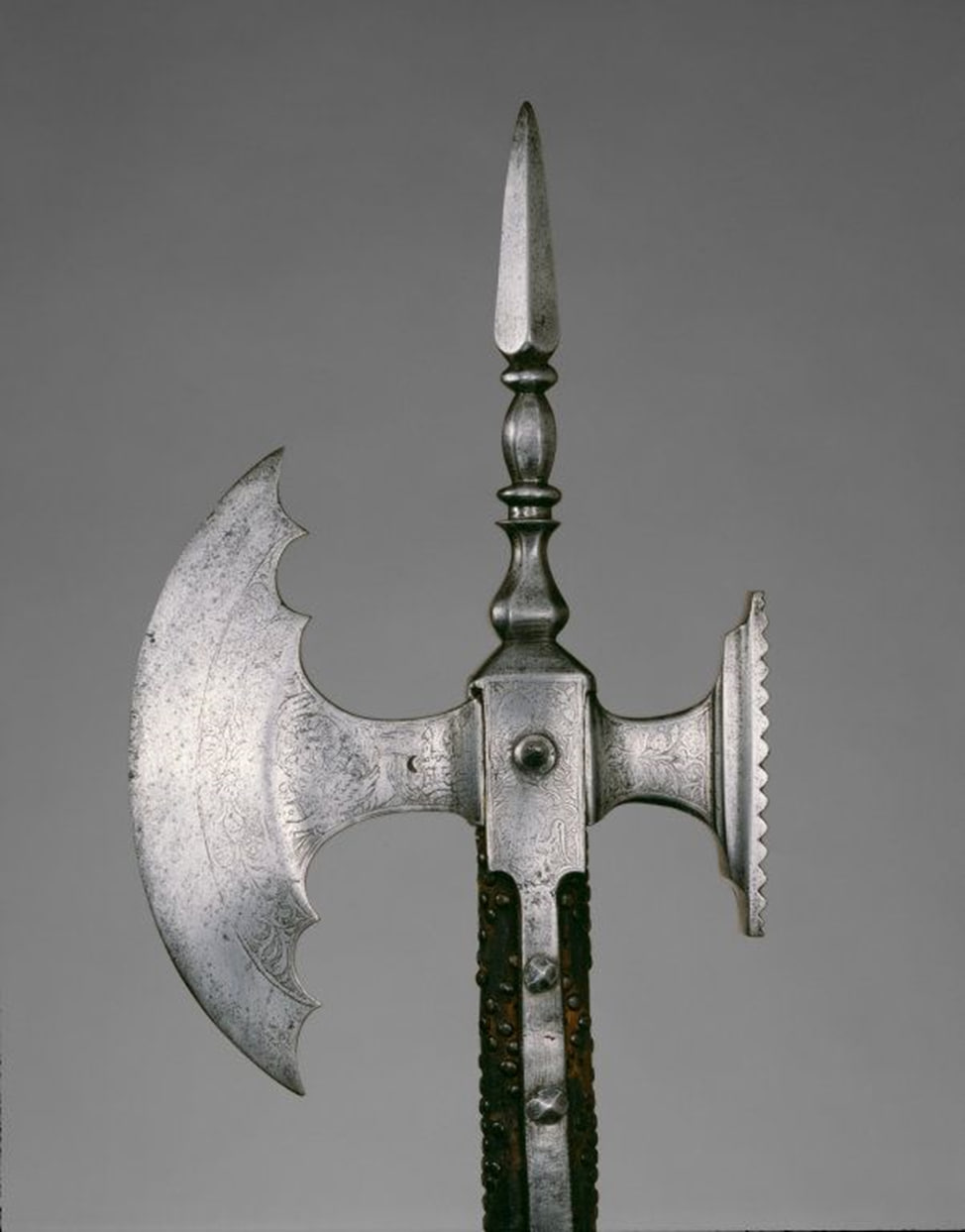
The halberd was an axe planted on a long shaft, which then gradually reduced the size of the blade for a concentrated transfer of inertia for armor-piercing strike.
Pikes were
highly specialized weapons that began to gain popularity in the 14th century and
lasted until the 17th and 18th centuries. Swiss mercenaries were best able to
use it in combination on the battlefield with other weapons, a halberd and in
later times with firearms.
Pole weapon in other
periods:
Pole weapon
gradually began to go out of fashion among the infantry due to the increasing
popularity of firearms by the beginning of the 18th century, and they mostly
did not use pikes or halberds. And also most armies stopped using full armor,
we will replace them with brigantines, which covered only the soldier's body.
But some cavalry units of armies could use polearms until the beginning of the
20th century. The effectiveness of the use of maneuver units of spears in the
19th century took place, but was already significantly inferior to the cavalry
and infantry of the regular army